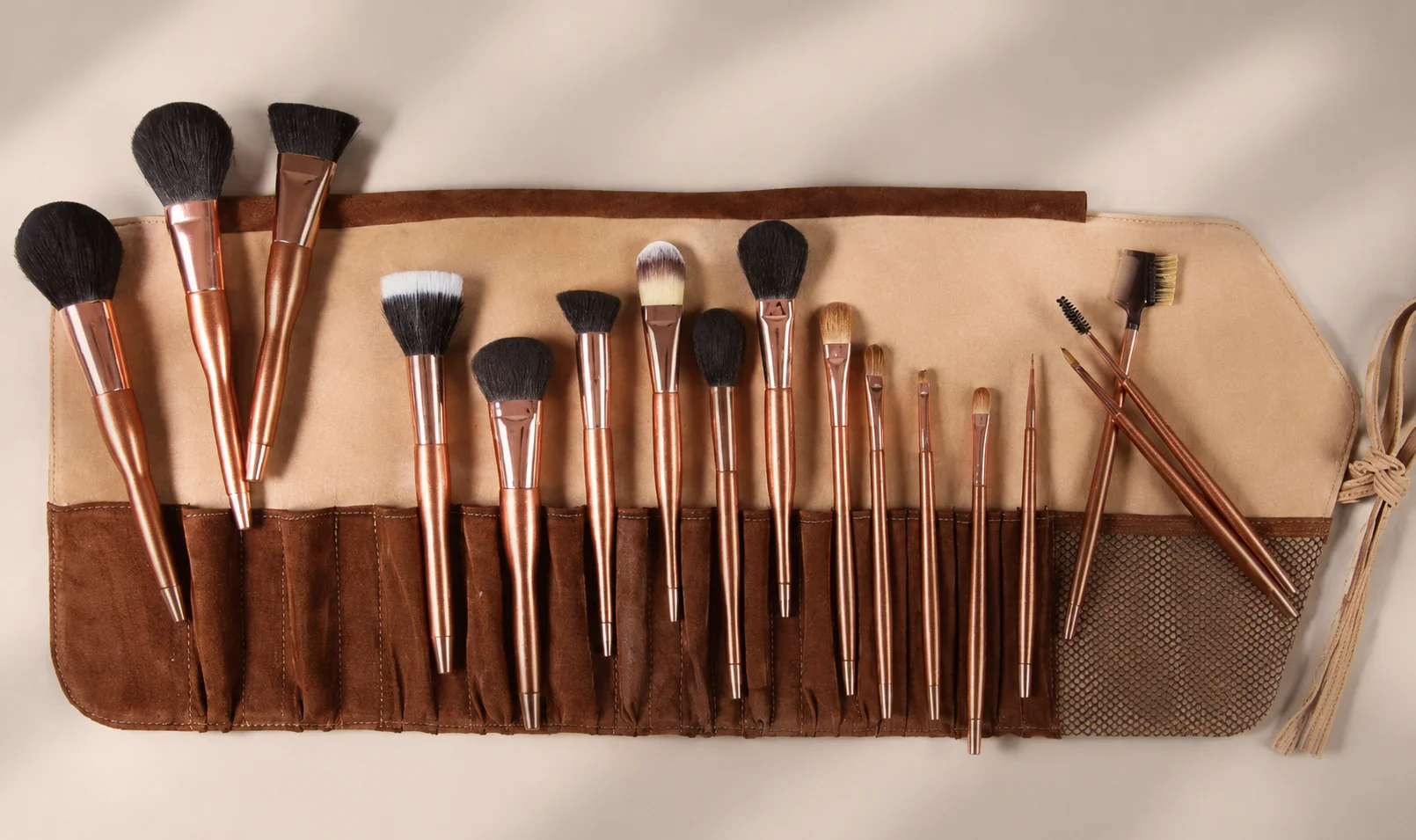
Choosing a custom makeup brush supplier is not only a price comparison. For a beauty brand, private-label team or wholesale buyer, the important question is whether the proposed brush can be specified, sampled, approved and repeated with the intended materials, finish and packaging.
A reliable sourcing process starts with a clear product brief. It then turns that brief into decisions about brush function, bristle material, handle construction, logo treatment, packaging and the checks required before bulk production. This guide explains the questions that make those decisions easier to evaluate.
A practical starting point: ask a cosmetic brush supplier to confirm the agreed specification in writing before comparing quotations. A low initial price is difficult to assess if brush density, handle finish, logo method or packaging protection are not defined.
What Should a Custom Makeup Brush Supplier Be Able to Support?
A useful supplier conversation should go beyond a product photograph. Buyers should be able to discuss the intended brush function, target price position and the level of customization needed. For example, a project may use an established brush shape with a new colour system, or it may require a different handle profile, packaging configuration and set layout.
For custom cosmetic brushes, the key is to separate what is already available from what needs additional development. This helps a buyer understand which decisions can affect sampling, quantity planning and approval timing.
- Brush purpose and head shape: face, eye, complexion, powder or detail application.
- Bristle specification: fibre type, softness, density, colour and cut.
- Handle and ferrule: profile, material, finish, colour and fit.
- Branding: logo method, location and artwork requirements.
- Packaging: individual sleeves, pouches, cartons, trays or multi-piece sets.
Start with the Brush Brief, Not the MOQ
MOQ matters, but it is not a complete sourcing strategy. A buyer who begins with only a quantity target can receive quotations that look comparable but describe different products. The more useful sequence is to define the application need first, then decide which customization choices are essential for the brand.
What to include in a first brief
- Planned sales channel and intended user.
- Single brush, core set or travel set configuration.
- Target formulas and application use.
- Bristle, handle, ferrule and colour preferences.
- Logo and packaging requirements.
- Target quantity, approval milestones and launch window.
With this information, a production-managed sourcing partner can help distinguish a standard configuration from a more customized project. It also gives both sides a clearer basis for discussing quantities and next steps.
How Bristle Materials Affect Product Positioning
There is no single best brush hair choice. The appropriate material depends on the makeup formula, intended finish, brush-head design, price position and brand claims. Buyers should request material details rather than rely on broad labels alone.
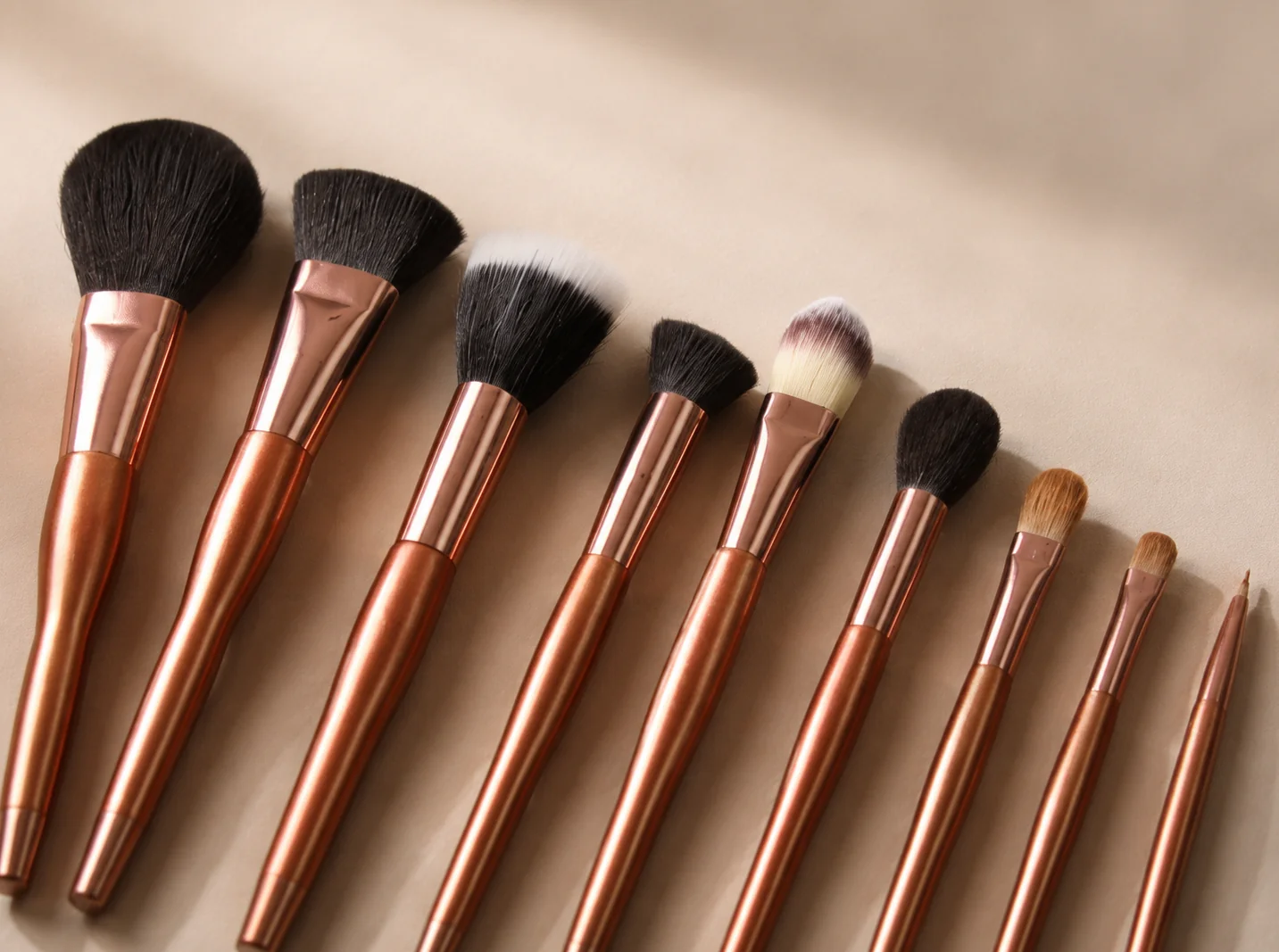
Bristle selection should be reviewed alongside brush function, density and the makeup formulas the brush is intended to apply.
Synthetic and vegan-positioned bristles
Synthetic fibres are commonly considered for projects using liquid, cream or powder products. The buyer should still define the desired softness, density, pickup, release and shape retention. If a brush is described as vegan, the product specification should support that statement; it should not be treated as a styling term.
Natural hair bristles
Some brush programs consider natural hair for particular tactile or powder-application preferences. These projects need more careful material-origin, market and claim review. Buyers should check the requirements that apply to their destination market and retail channel before putting a material claim into packaging or product copy.
Choose by function, then validate by sample
A dense complexion brush and a soft blending brush solve different tasks even when they use similar-looking fibres. The sample stage is the point to assess how the material, cut and density work together. Avoid treating “synthetic,” “vegan” or “natural” as an automatic performance guarantee.
Why MOQ Changes for Custom Cosmetic Brushes
MOQ is often affected by the combination of components rather than by the brush alone. A standard shape with an established handle may have a different quantity requirement from the same brush with a new finish, logo treatment and bespoke retail box. Buyers should ask for MOQ by configuration.
| MOQ driver | Why it can affect planning | Buyer question |
|---|---|---|
| Brush shape | A new or unusual silhouette can add development and approval steps. | Is this an established shape or a new specification? |
| Bristle material | Fibre type, density and colour can change component planning. | Which bristle details are fixed before sampling? |
| Handle and colour | Material, coating and colour choices influence the component set. | Which options use an established finish? |
| Logo | Placement and application method should be approved against the finish. | What artwork and sample approval are required? |
| Packaging and sets | Boxes, pouches, inserts and multi-piece sorting can have separate requirements. | Is packaging MOQ quoted separately from the brush? |
Five Quality Checks Before Bulk Production
Quality control works best when the buyer and supplier agree on the reference sample and the points to inspect before bulk production begins. A written checklist makes it easier to distinguish a normal material variation from a result that needs review.
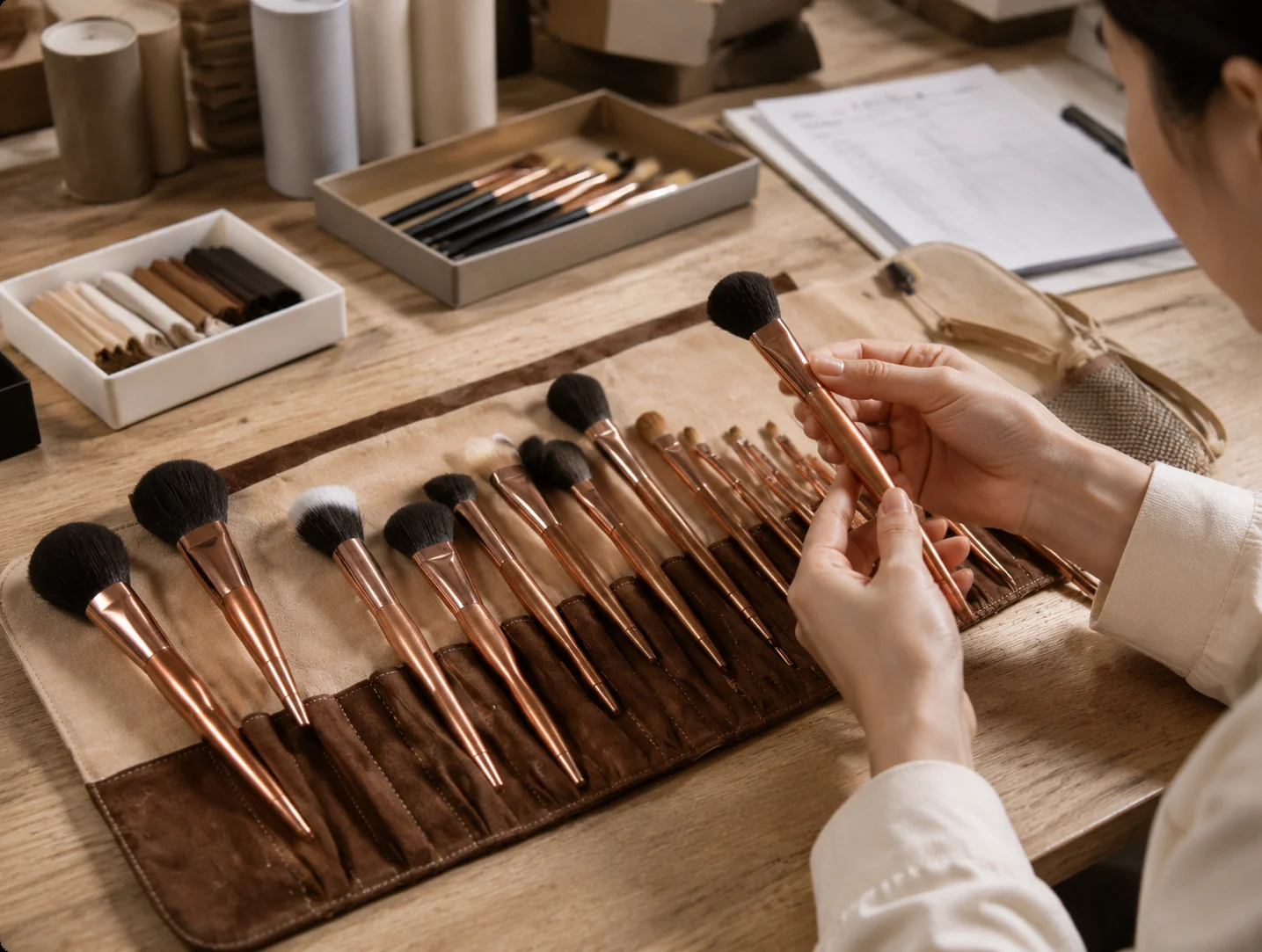
A reference sample and documented checks give the project team a practical baseline for reviewing bulk-production readiness.
1. Bristle retention
Check for loose fibres and agree how bristle retention will be assessed. The aim is not an unsupported “zero shedding” promise; it is to define an acceptable, reviewable standard for the agreed brush design.
2. Softness, density and pickup
Review whether the brush feels and performs as the approved sample intends. Softness alone is not enough: density, fibre length and the cut of the brush head can change product pickup and control.
3. Shape consistency
Compare the brush-head profile, cut, length and overall silhouette with the approved reference. This is especially important for angled, tapered, flat and detailed eye brushes.
4. Handle, ferrule and logo finish
Inspect the alignment and finish of the handle and ferrule, plus the clarity and placement of any logo. Confirm that finishes and print details match the approved artwork and sample.
5. Packaging protection and presentation
Packaging should protect the brush head during storage and transport while presenting the product as intended. Check sleeves, trays, pouches, inserts and outer cartons as part of the product—not as an afterthought.
What Can Be Customized in an OEM/ODM Makeup Brush Project?
Customizable makeup brushes can range from a selected existing brush set with a brand colour and logo to a more complete product-development project. The right scope depends on the brand’s point of difference and the elements it needs to control.
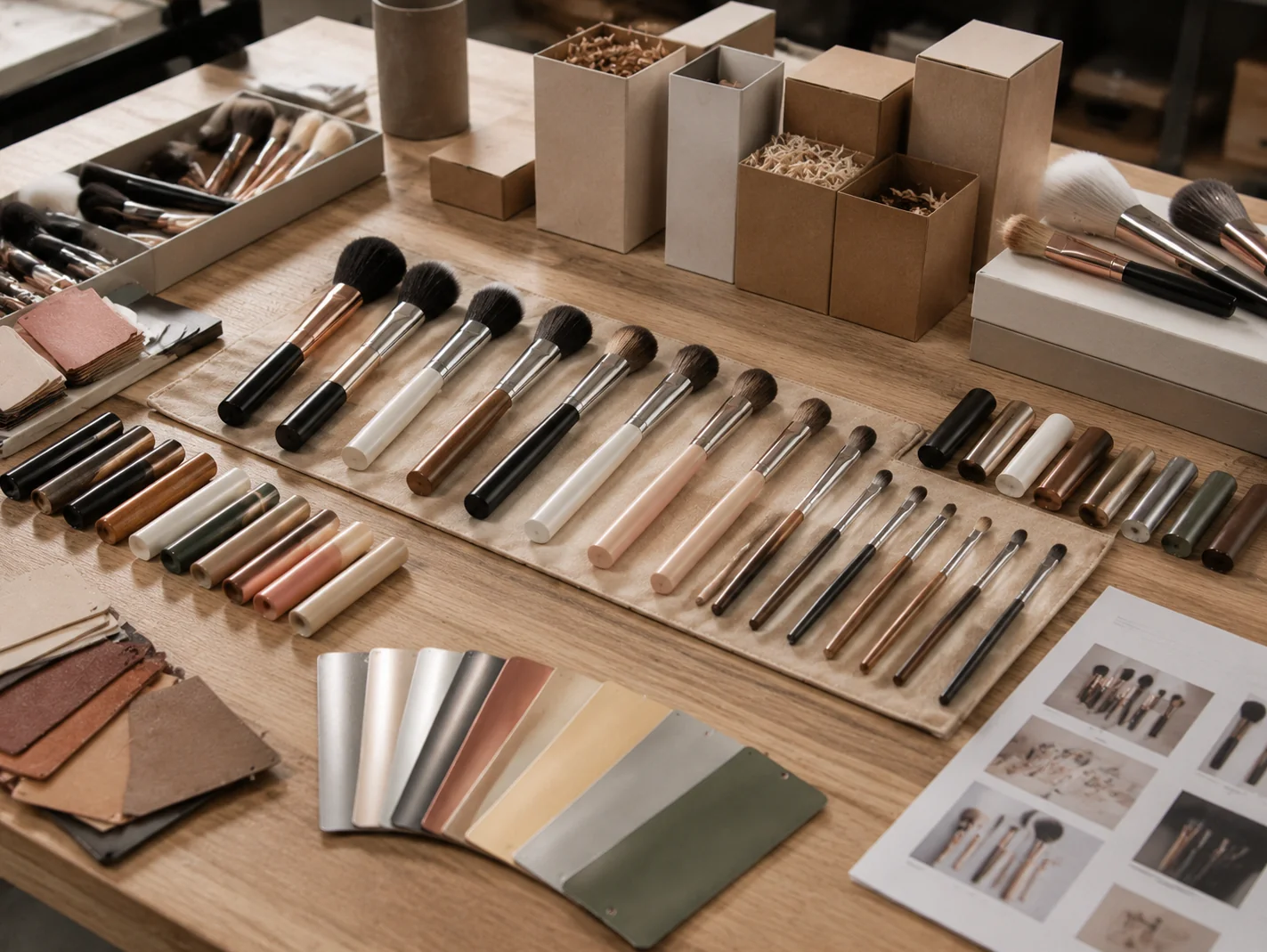
A set can combine brush selection with coordinated handle colours, ferrule finishes and packaging components.
- Brush shape and set composition.
- Bristle material, colour, density and cut.
- Handle profile, colour and surface finish.
- Ferrule colour and appearance.
- Logo method and placement.
- Individual packaging, pouches, cartons and multi-piece set presentation.
Explore Joyning Beauty’s custom makeup brush options when planning a brush assortment or private-label set.
Questions to Ask Before Choosing a Makeup Brush Supplier
- Can the product specification be confirmed in writing before sampling?
- Which bristle material suits the intended formula and brush function?
- Which components are established, and which require additional development?
- How do logo and packaging choices affect quantity planning?
- What does the sample-approval process cover before bulk production?
- Which quality checks will be agreed against the approved reference?
FAQ
What is a typical MOQ for custom makeup brushes?
There is no single figure that applies to every project. Quantity requirements can change with the brush specification, handle finish, logo, packaging and set configuration. Request the MOQ against the exact configuration you plan to approve.
What is the difference between synthetic and vegan makeup brush bristles?
“Synthetic” refers to man-made fibres. “Vegan” is a product-positioning claim that should be supported by the specified materials used in the brush. Buyers should confirm the actual fibre information before using either term in marketing or packaging.
Can wholesale makeup brushes include custom logos and packaging?
Yes, many projects can combine brush selection with handle colours, logo application and packaging. The available scope depends on the component choices, quantity and approval process, so confirm these details in the brief and quotation.
What should be approved before bulk production?
Approve the product specification and reference sample, including bristle feel and retention, brush-head shape, handle and ferrule finish, logo placement, packaging and the agreed quality checks.
Planning custom or wholesale makeup brushes? Share your target brush functions, material preferences, branding, packaging idea, quantity and launch window for a practical sourcing review.
Discuss Your Brush Project